
Fat freezing works slowly. On the day, the area is red, numb and firm, with no visible change. The first subtle difference tends to show at weeks 3 to 4, a clearer one at weeks 6 to 8, and the full result at around three months. Aftercare matters less than most people expect: only one step has a trial behind it, and it happens in the clinic before you leave.
VIVO Body Studio offers fat freezing. This guide covers what to expect afterwards. For how the cooling works, see how fat freezing works.
What one session can realistically change
Studies report an average reduction of 20 to 25% in the thickness of the fat layer in a treated area after one session. The spread is wide and depends on how it is measured: a 2015 review found 14.67% to 28.5% with callipers and 10.3% to 25.5% with ultrasound.
That figure is local. It measures the pinchable fat under the skin in one area, not your total body fat or your weight. A 2025 meta-analysis found fat freezing reduced local circumference and fat thickness but did not significantly change body weight. It is contouring, not weight loss, and nobody can promise you a percentage. Our guide to how much fat one session removes reads the figure in more detail.
The timeline, from treatment day to month four
| When | What usually happens |
|---|---|
| Same day | Redness, swelling and numbness; no visible fat change |
| Weeks 1 to 2 | Numbness and tingling come and go; still no visible change |
| Weeks 3 to 4 | First subtle changes; clothes may fit differently |
| Weeks 6 to 8 | Visible contour change for many people |
| Weeks 8 to 12 | Full result becoming apparent for most |
| Month 4 onwards | Clearance complete; result established |
Behind the table, the body is clearing the damaged fat cells. Inflammation begins about a day after treatment, and the immune cells that digest fat are most active somewhere between day 14 and day 30: sources differ on the exact peak. Clearance takes around three months, though sources vary, and some put it nearer month 4.
Early on, swelling (common for 1 to 3 weeks) and firmness (days to weeks) can make the area look no smaller, or slightly bigger. Many people feel a stronger wave of tingling around days 4 to 10 as sensation returns, which clinic guides describe as normal.
In a 2025 CoolSculpting Elite study, 71.7% of participants reported a noticeable improvement at 4 weeks. That was participants’ own impression, on one branded system, so treat week 4 as a possible early sign rather than a deadline. Our guide to judging progress between 4 and 8 weeks covers this stage.
Aftercare: the one step a trial tested, and the rest
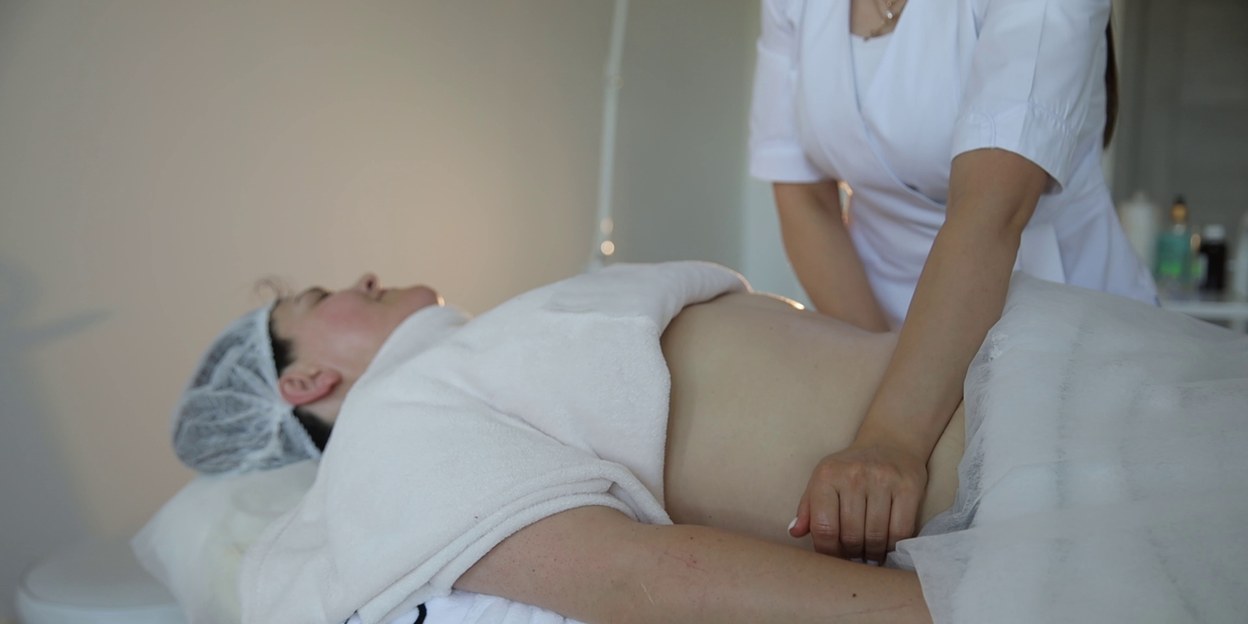
What has been tested. In the Boey and Wasilenchuk study, 10 patients had both sides of the lower abdomen treated, and one side was massaged for two minutes straight after the applicator came off. At 2 months the massaged side showed 21.0% reduction against 12.6%, a 68% greater effect. At 4 months the gap (14.9% against 10.3%) was not statistically significant. This is a small study of practitioner massage done while the tissue is still cold and firm. It says nothing about massaging at home, which has never been tested, or lymphatic drainage days later, where the evidence is thin and mixed. Massage after fat freezing covers the trial in full.
What is clinic practice. The rest of the usual advice comes from clinic aftercare guides, not trials:
- Going back to normal activities the same day, with light walking from day 1
- Avoiding intense exercise on the treated area for 48 hours
- Avoiding aspirin and ibuprofen for 24 hours if possible (do not stop a prescribed medicine without asking your doctor)
- Keeping saunas, hot baths and extreme cold off the area at first
- Drinking 2 to 3 litres of water a day in the first week
- Loose, soft clothing: published protocols do not require compression, and no trial has tested it
On alcohol, the UK ACE Group patient leaflet says practitioners often advise cutting down for 8 to 12 weeks, while noting there is little evidence. None of these steps has been shown to change the size of your result. No diet, supplement or “detox” speeds up clearance either. See what to avoid after fat freezing for each rule and how long it applies, and skincare after fat freezing for creams on treated skin.
If an area grows or hardens rather than shrinks, contact your clinic. The FDA describes paradoxical adipose hyperplasia (PAH), an uncommon enlargement of treated fat, as developing two to five months after treatment and not resolving on its own.
Recording your progress
Without a consistent record, people tend to underestimate their own change. A simple routine fixes that:
- Photos: same distance (1.5 to 2 metres), same diffuse light, plain background and time of day; front, both sides and a 45-degree view; same underwear; check framing against your navel and hipbone.
- Tape: same landmark, tape level, same tension.
- Callipers, if you have them: the same site, averaging three readings.
- The scale: to confirm your weight is stable, not to judge the result.
- When: baseline, then 4, 8 and 12 weeks, with an optional 6 months.
There is more detail in our guides to taking your own before and after photos and measuring your results at home.

The review at three to four months
Clinical studies use 12 weeks as the main outcome point, and three months is the earliest fair full assessment. A follow-up at three to four months is when you compare against baseline and decide whether to treat the area again. In one real-world review of 3,262 patients, the median was one session per patient (mean 1.9). If you do go again, the minimum gap is 30 days, with 6 to 8 weeks the usual recommendation.
Questions worth asking at consultation:
- Is a follow-up review included, and when?
- Will the clinic take standardised photos and measurements?
- What happens if there is little visible change at 12 weeks?
Keeping the result
Treated fat cells are removed and are not replaced. The fat cells that remain can still grow if you gain weight, so the result depends on keeping your weight steady, with the usual guidance being to stay within about 10 lbs of your treatment weight. Long-term evidence is thin. Most studies stop following patients at 3 to 6 months, and the longest data come from two men treated on one flank, whose photographs still showed the difference at 6 and 9 years. That is too few people to say how long a result lasts for anyone else.
If you would like to talk through a plan, see the Leeds clinic, current prices or get in touch. Our guide to what the appointment feels like covers the day itself.
Sources and further reading
- Ingargiola et al. (2015), cryolipolysis review, Plastic and Reconstructive Surgery
- 2025 meta-analysis on cryolipolysis, body weight and local fat
- 2025 CoolSculpting Elite dual-applicator study
- Boey and Wasilenchuk (2014), massage after cryolipolysis, Lasers in Surgery and Medicine
- UK ACE Group patient leaflet on cryolipolysis
- FDA: non-invasive body contouring technologies
- Aesthetic Surgery Journal review of cryolipolysis outcomes
- Journal of Cosmetic Dermatology (2016), long-term follow-up of two men treated on one flank
Pros & Cons
Pros
- One session reduces the fat layer in the treated area, typically by 20 to 25% on average in studies
- Most people return to their usual activities the same day
- Treated fat cells are cleared by the body and are not replaced
Cons
- The change is gradual: there is nothing to see in the first two weeks, and the full result takes around three months
- Most aftercare advice is clinic practice rather than tested evidence
- The fat cells left behind can still grow if your weight goes up
Frequently Asked Questions
Why does the treated area look the same, or slightly bigger, in the first fortnight?
Swelling is common for 1 to 3 weeks and the area can feel firm for days to weeks, while the treated fat cells have only just begun to break down. Visible change usually starts at weeks 3 to 4 at the earliest, so the first fortnight is too early to judge.
Should I massage the area myself at home?
The only trial tested two minutes of massage by a practitioner straight after the applicator came off. Some clinic guides suggest daily gentle self-massage for the first two weeks, but no study has tested a home routine, so treat it as optional comfort advice and follow your clinic's instructions.
Do I need to stop drinking alcohol after fat freezing?
No study has tested alcohol after fat freezing. The UK ACE Group leaflet notes that practitioners often advise cutting down for 8 to 12 weeks while saying there is little evidence, and clinic advice ranges from 48 hours to 3 days. It is sensible advice for swelling, not a proven way to improve the result.
When should I decide whether to book another session?
At your review around three to four months after treatment, when clearance is largely complete and you can compare against your baseline photos and measurements. Deciding before then means judging a result that is still developing.


