

A fat-freezing appointment can involve a strong pulling sensation followed by intense cold, then a period when the treated area feels numb. It is not reliably painless. Understanding what happens before cooling starts, how to get help during it and what to expect when the applicator comes off makes the visit easier to plan. The UK CoolSculpting patient information describes these changing sensations, but experiences and equipment vary.
Cryolipolysis, the technical name for fat freezing, aims to reduce selected fat beneath the skin; it is not a weight-loss treatment. This guide covers the appointment experience. Ask which device is proposed: CoolSculpting is one particular system, and its instructions do not establish how another machine should be used. Nothing here identifies the equipment used at the Leeds clinic.
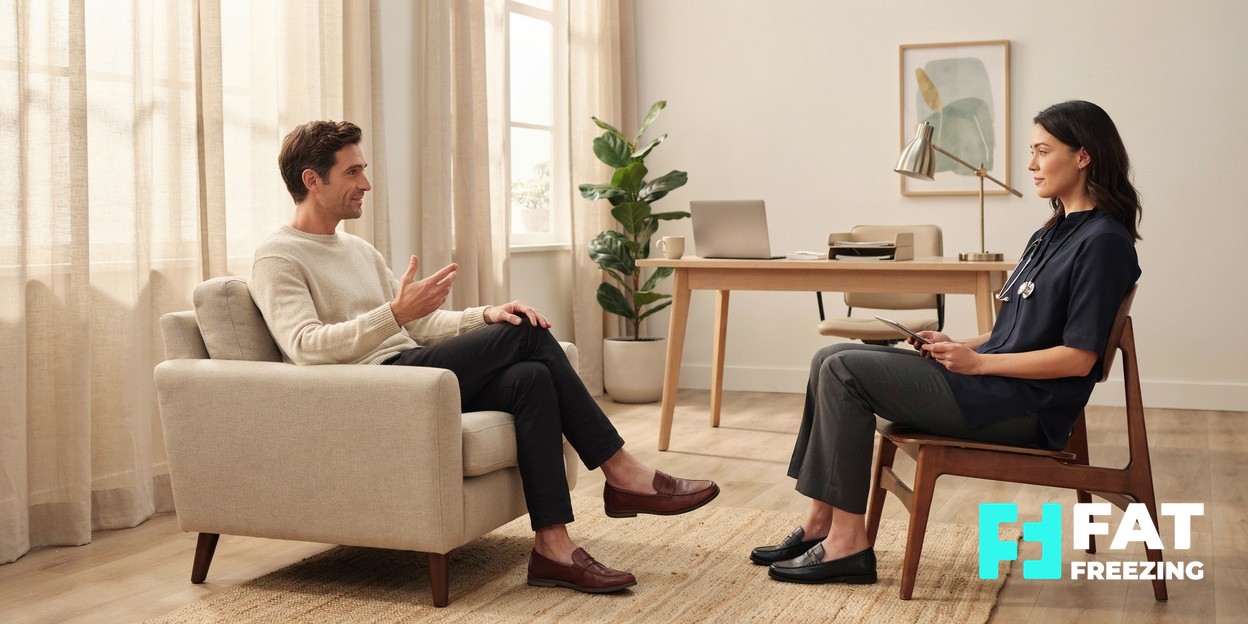
The conversation before treatment matters
Begin with the change you hope to see and the area that concerns you. Ask the practitioner to explain what they would treat, the realistic limits and whether leaving the area alone is a reasonable choice. The NHS advises discussing expectations, checking practitioner experience and asking what could go wrong. You should have time to consider the information and can walk away if uncomfortable.
Bring your medical history and a current medication list. Mention cold reactions, circulation or sensation problems, skin changes, previous surgery, scars, a hernia, and pregnancy or breastfeeding. These need assessment under the proposed device’s instructions. Some conditions are explicit exclusions: CoolSculpting labelling names cryoglobulinaemia, cold agglutinin disease and paroxysmal cold haemoglobinuria. You do not need to recognise every medical term; tell the practitioner about any diagnosis or unexplained reaction to cold. Manufacturer suitability information
Consent should cover the proposed treatment, alternatives, expected discomfort and complications, plus how concerns will be handled afterwards. Cryolipolysis can cause burns and, uncommonly, paradoxical adipose hyperplasia: treated fat enlarges and becomes firm months later, does not normally disappear by itself and may require surgery. These belong in the discussion even though they are not the usual appointment experience. FDA body-contouring guidance
Getting positioned and protecting the skin
Ask what clothing you will need to remove and how privacy will be maintained. Choose clothes that are easy to change into afterwards. Tell the practitioner before positioning if you have back, neck or mobility problems; being able to tolerate the position matters as well as tolerating cooling.
The applicator is the part placed against the treatment area. Its fit, your position and skin preparation must follow the instructions for that particular model. As one example, the CoolSculpting Elite patient safety leaflet describes applying gel or a gelpad with the applicator. It distinguishes vacuum applicators, which draw tissue into a cup, from surface applicators that can feel like pressure. That example is not a universal equipment checklist.
Ask how the skin will be protected and what checks the practitioner makes before starting. Settle any awkward pressure from the couch or supports first. If you need to move once cooling begins, ask for help rather than adjusting the applicator yourself. A convenient position for looking at your phone may not be the right treatment position.
What cooling can feel like
With suction-based treatment, you may notice pulling or pinching before the cold becomes the dominant sensation. Stinging, tingling, aching or cramping can also occur. These may lessen as numbness develops, but nobody can promise how quickly that will happen for you. The manufacturer’s UK description of treatment sensations is more useful preparation than an assurance that you will feel nothing.
Do not assume an anaesthetic is part of the appointment. Ask how discomfort is managed with the proposed treatment, including what happens if you want to stop. Do not start or stop medicines on your own to prepare.
Reading or listening to something may be an option if your position allows it. Treat this as a way to pass the time, not a reason to book an important work call. You should be able to notice how you feel and communicate easily.
Agree how to get attention
Before cooling starts, establish who will monitor you and how to call them. Ask what checks are required for the equipment being used. Do not infer that a machine’s sensors mean your symptoms are irrelevant.
Speak up promptly about severe or increasing pain, a sensation you find intolerable, or feeling faint, sick or unusually sweaty. Dizziness, nausea and fainting are reported possible reactions in the CoolSculpting Elite safety information. You do not need to decide whether a symptom is a complication before asking the practitioner to assess it.
Useful questions to settle before starting are:
- What sensations should I report immediately with this device?
- How do I get your attention, and what happens if treatment needs to stop?
- How long should I allow for the entire visit, including every planned placement?
- What written instructions and contact details will I take home?
When the applicator comes off
The area can look raised or firm immediately after removal. Some device protocols include practitioner massage; ask what is planned and say if it hurts. This does not establish a home-massage routine. Redness, tenderness and altered sensation can follow treatment. CoolSculpting Elite patient leaflet
Before dressing, ask the practitioner to explain what they see and what changes should prompt contact. Blistering, marked colour change or severe or worsening pain warrant prompt assessment rather than waiting for a routine results appointment. Burns are a recognised complication. FDA safety guidance
Give the journey home some breathing room
Many people return to everyday activities quickly, although swelling, bruising and discomfort are possible. The American Academy of Dermatology’s patient guide describes this typical recovery; it is not a promise that a particular shift, commute or outfit will feel comfortable.
For practical planning, leave space after the appointment rather than relying on an exact finish. Discuss work involving lifting, prolonged standing or a tight uniform. If you plan to drive, ask about any treatment-specific advice and do not drive while unwell or unable to control the vehicle comfortably. These are planning considerations, not a prescribed recovery timetable.
The Leeds clinic is at Brooklands Court Business Centre, Tunstall Road, LS11 5HL. Confirm the full appointment length and any access needs through the team, then arrange travel around that answer. Leave with the written instructions, a contact route for concerns and a clear next step.
Sources and further reading
- NHS: Before you have a cosmetic procedure.
- FDA: Non-invasive body contouring technologies.
- American Academy of Dermatology: Non-invasive fat removal—what can you expect?.
- CoolSculpting UK: Questions and answers, manufacturer information specific to that system.
- CoolSculpting Elite: Consumer important safety information, US device-specific leaflet, not evidence of Leeds clinic equipment.
Frequently Asked Questions
Does fat freezing hurt throughout the appointment?
It can cause pulling, intense cold, stinging, aching or cramping. Sensations may ease as the area becomes numb, but this is not a guarantee of comfort. Tell the practitioner about pain, especially if it is severe or increasing.
Does the advertised cooling time cover the whole visit?
Not necessarily. Assessment, consent, preparation, applicator placements and checks afterwards also take time. Ask for the expected total appointment length for your actual treatment plan before arranging work or transport.
Will I be given an anaesthetic?
Do not assume that an anaesthetic is included or required. Ask the practitioner how discomfort is managed with the proposed device and what to do if treatment becomes uncomfortable. Do not start or stop medicines to prepare without appropriate advice.
Can I go straight back to work afterwards?
Many people resume everyday activities promptly, but tenderness, swelling or other symptoms can affect comfort. Discuss the demands of your job, leave flexibility in your schedule and follow the advice given for your treatment.

